

I found myself thinking about going back to school after the last bird left the nest. My youngest son lives across the country and has his own family. Like a lot of mothers that left me with too much time on my hands and a house that was just too quiet. It gave me a lot of time to think about my purpose in life and all the dreams that I had once had. One of those dreams was to graduate from college.
I was one of those who had better things to do than give school four more years. I didn’t appreciate at the time how important it was to pay attention to what was going on in the world around me much less keep learning more about it. The end result was that I turned 50 without giving education much of a second thought. Life gets in the way.
The inspiration to go back to college at 52 came in an email from my state wondering if I wanted to further my education. It was one of those spammy kind of emails that you delete a dozen times a day but the idea it left began to grow legs.
After a few days of daydreaming about what and where I would study, I turned my attention to more practical thoughts. I figured, before I pick up my cap and gown, I should probably sit down and figure out if I could even go back to school at this stage of my life. Let’s face it, it’s a lot different being 50 than it is to be 18.
So, I came up with a list of concerns that I, and other adults like me, have when trying to decide if going back to school as an older person is going to work.
Can I even afford to go back to school right now?

Like a lot of people, a big question for me was, can I even afford to go back to school. At the time, I was fortunate in that I was only working part time. So, I had some space on the calendar but very little money in the bank. Cost is one of the most significant barriers for students over 40. Jobs for the Future reports that adult learners are much more cautious about borrowing money for education than traditional students. Studies by CAEL show completion rates rise when institutions offer grants, emergency aid, and flexible payment options. My best advice for this is to make an appointment to speak with the financial aid department of the school(s) you are considering attending and bring up any concerns you may have.
Unfortunately, the same report by CAEL indicates that the federal financial aid is not designed for the working adult student. There are gaps in its ability to solve the problems of those facing things like lifetime eligibility gaps and not meeting federally or institutionally determined Satisfactory Academic Progress (SAP) requirements. These are notable concerns to be aware of and ask questions about when you meet with the school’s financial aid department. Still, the most important thing you can do concerning education funding is file your Free Application for Federal Student Aid (FAFSA) as soon as possible. Currently, the program is taking applications for the 2026/2027 school year. FAFSA is a federal government program that helps college students who qualify pay for their education.
Indiana University Indianapolis financial aid page can be found here.
Can I fit school into my already busy life?

Not everyone considering going back to school later in life has an open schedule to do it. In fact, a 2024 study by Charles Harris and Helena Castro indicates that many adults returning to school report a constant struggle to balance school, a job or jobs, and caregiving. Flexibility was the main factor that kept them going. Further research by the Canadian Journal of Dental Hygiene shows that mature students, especially women balancing family roles, experience “role conflict” where personal and academic responsibilities overlap. My best advice for this is to not leave anything to chance. Make a solid plan for when you are going to do your schoolwork and make sure that it is a time you will not be bothered. I know from personal experience life tends to go off the rails in the weeks when you decide to just get around to your homework as soon as you can. PLAN IT. DO IT.
Am I going to fit in at college as an older student?

This was my number one question, personally.
In the article, “You’re thrown in the deep end: Adult learner identity formation in higher education,” James Brunton and Finian Buckley found that adult learners describe starting college as intense and disorienting, challenging their sense of self and belonging.
I got a letter from Indiana University Indianapolis letting me know that I had been accepted and was welcome to attend orientation to get to know the school and meet other students who would be attending that Fall. That was when my biggest fear in this whole journey showed up. I was absolutely sure that everyone there was going to laugh at me walking in at 52 years old and explaining that I was the student, not the parent. It went so much better than I thought it would. Orientation came and went. I made new friends and realized that even though we are starting our educational journey at such different times in our lives, we were all just a group of people trying to make it to graduation and get on with what we really want to do with our lives. Nobody laughed.

Is my brain out of practice? Can I keep up with the technology?
The closer your goal to going back to school comes to being reality the more questions you will have. Many of them will come from self-doubt. Am I smart enough; can I even remember a single thing they taught me in high school; and can I keep up with the changes in technology since my high school days were some of my questions. Well, the research is in, and multiple studies show that in spite of adult learners’ tendency to underestimate their academic ability, they do just as well, if not better than traditional students. Just like I did with my orientation, you will resolve some of these questions by visiting the school before class starts. Take advantage of orientation and welcome events. This is where you will get your biggest pre-day-one vibes telling you if you’ll be welcomed and included there. I did.
What is an “age-friendly” university?
Older learners benefit greatly from age-friendly campus design. An article published by the National Library of Medicine describes the age-friendly movement and concludes that when older adults feel physically and socially supported, their sense of belonging increases.
Fortunately, the Age-Friendly University Global Network (AFUGN) maintains an official list of the over 140 member institutions. Here you will find a breakdown by region. Once you select your region, you will find the specific colleges and universities that have endorsed the AFU principles.
You owe yourself your best self!
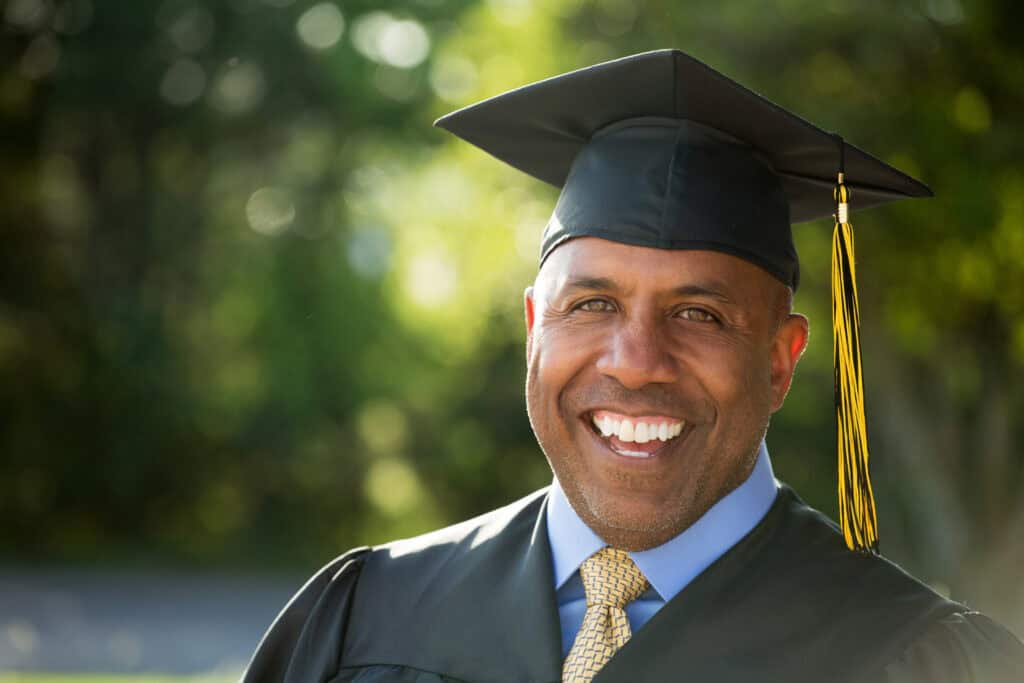
If you’re like me and feel like you didn’t set yourself up for the best opportunities by cutting your education short, you owe it to yourself to look into what it would realistically look like for you to go back to school. It’s not easy. I’ve wondered many times how I was ever going to get through it. There have been panic attacks and temper tantrums along the way. However, I am writing this article as one of the last assignments for college. I graduate next month. If I could give any last piece of advice for you to remember, if nothing else, it would be this. You owe yourself the best version of yourself. If that includes going back to school, there are valuable resources available to help you decide if this is something doable and desirable. Go for it!
Resources
Free Application for Federal Student Aid (FAFSA)
Indiana University Indianapolis Admissions Office
Age-Friendly University Global Network (AFUGN)
Adult Postsecondary Learners: Reviewing the Data and Evidence
How they pay: The voice of adult learners…
Balancing Work, Family, and Education: Challenges Faced by Adult Learners in Higher Education
Committed to yourself or have yourself committed: Balancing family life with student success
You’re thrown in the deep end: adult learner identity formation in higher education
Older Learners in Higher Education: Age-Friendly University Models in and Beyond the Classroom